
Rumplestiltskin wove gold from straw. That he was a creepy little man with questionable scruples is also true, but, in the world of Grimm, he was capable of crafting magnificence out of mulch, which makes for a memorable story.
A question posed at the church book club meeting I attended this week is with me still: About the book we read, Travels with Charley, did this journey actually happen, or did John Steinbeck simply drape the ideas he wanted to communicate about America around the framework of an imagined cross-country trip?
The account depicts his journey in 1960 across the country accompanied by his poodle, Charley, and a cast of unnamed characters from Maine, to Oregon, to the Deep South.
In Minnesota libraries, evidently, the book is classified as “nonfiction,” whereas in California, it is “fiction.”

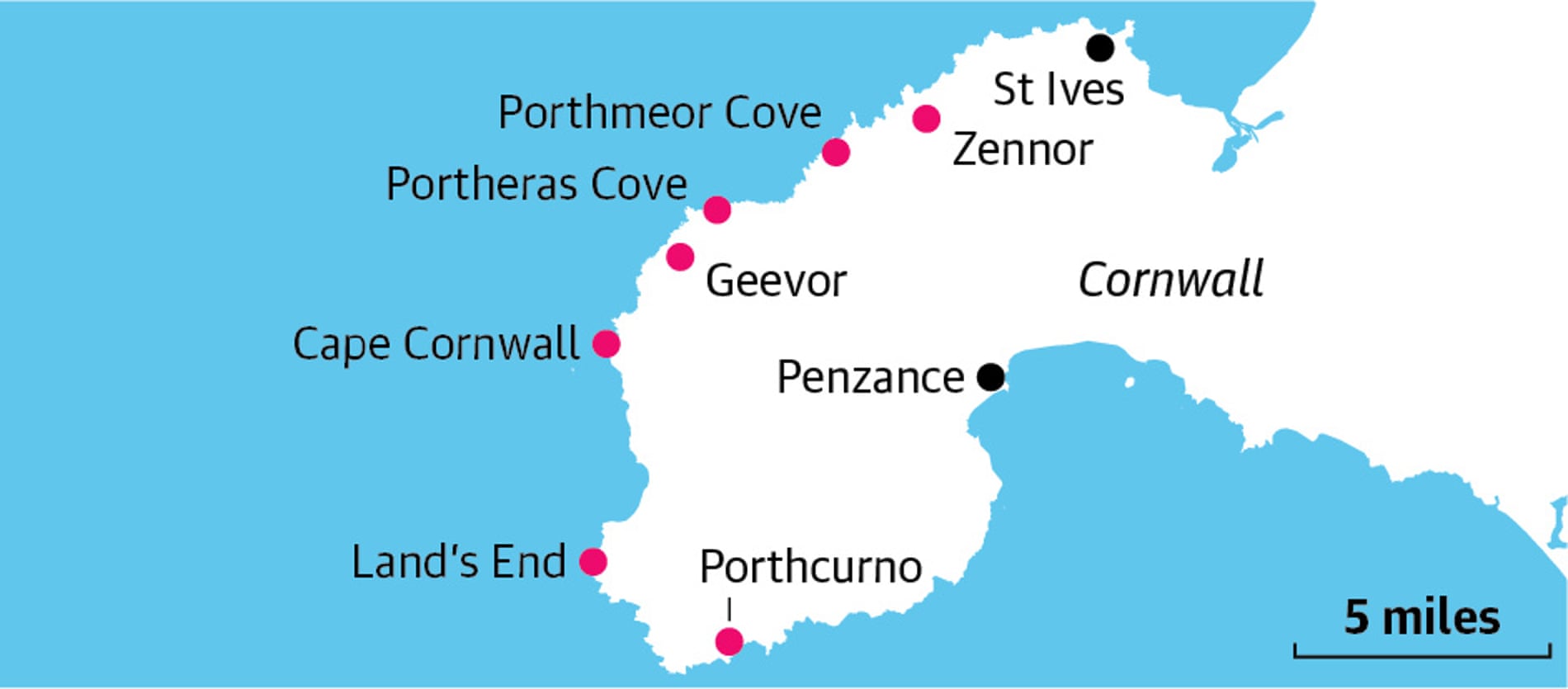
This is interesting to me particularly because of the recent kerfuffle raised over the book I’ve read — and appreciated — by Raynor Winn, The Salt Path . It describes the grueling trek a plucky couple undertake along the southwest coast of England after losing their business and finding themselves homeless. The husband, coping with a degenerative physical condition, seems to improve and become stronger over time despite the physical challenges and exposure to harsh conditions. People have come forward contradicting facts and details of the books, saying they are fabrications rather than accounts of true events. The fallout for the author has been dramatic. Publication of her next book was delayed, and she has found herself discredited, and having to defend herself on numerous fronts.
With Steinbeck, critics have noted that his descriptions of rustic nights spent alone under the stars are belied by hotel receipts and evidence that he was joined by his wife frequently during his four-month journey. That scenes are invented and peopled out of thin air to serve the arc of his narrative.
Does a fictitious dialogue with a maybe- or-maybe-not-real person utterly disqualify an author from sharing his or her words? My hunch is that license is regularly taken by authors of memoirs (Three Cups of Tea and A Million Little Pieces are two examples of books that have faced similar backlash), and that disclaimers about the contents being based on their own faulty memories and “mistakes made are entirely my own” are included for just that reason.
What should be expected of any memoirist’s recollections of a journey made over time and changing landscapes? Is it reasonable for the reader to expect to take what a writer presents at face value? Or should there always be an awareness in the reader’s mind that “this is probably more or less true, but whether or not the events actually occurred as presented is less significant than the substance of the message or theme communicated by the author.”
I believe it comes down to intent.
What is the purpose of the invented elements, and how do they contribute to the overall scheme of the work? Is the intent to deceive, to cover up ugly truths? Do they actually result in harm to others? Or is the artifice benign… artfully molded and shaped to form the sculpture the author envisions. I think a case can be made, even in memoir, that the writer has some latitude regarding events, dates, and places, for the purpose of serving their artistic ends. Otherwise, unless one keeps an exhaustive, detailed diary so that nothing can be brought into question in the future, how could anyone publish a memoir that passes muster?
The difference between autobiography and memoir matters. An autobiography is an exhaustive, chronological presentation of one’s entire life. Memoir is reflective, and is perhaps hazier around the edges. To borrow the metaphor found in the article about Steinbeck (above), while the first may be considered a photograph, the other is more like an Impressionist’s sketch. Both can be said to be Real, to offer Truth.
This reminds me of the scene in Harry Potter and the Deathly Hallows: Harry is having a conversation with the deceased Dumbledore in some unknown place that reminds Harry of the Kings Cross station. He asks if the conversation is real, or is it all in his head. Dumbledore’s response: “Of course it is happening inside your head, Harry, but why on earth should that mean that it is not real?”
In the case of Raynor Winn, she has been accused of falsely describing the actual events that led up to their being “homeless,” (and challenged as to whether or not the couple truly was homeless, when they owned property in France), of exaggerating the poor health / physical condition of her husband prior to their embarking on their trek, and of being guilty of fiscal misbehavior. There may be additional findings beyond what was originally reported by the Observer in July of 2025, but I haven’t kept up with it.
My original reaction to seeing this months ago was dismayed outrage, and I continue to be disappointed that the author may have attempted to (or indeed managed to?) pull wool over readers’ eyes, although she has vigorously denied wrongdoing and defended her actions. If her critics are correct, she is justifiably facing the consequences of her actions because it is details surrounding the very premise of her book –why and in what condition they embarked on the Salt Path — that have come under fire, as well as pesky allegations of financial wrongdoing that she hasn’t quite dodged. While memoirs may or may not be a record of factual events, they should certainly not falsify wrongdoing or whitewash bad actors.
And yet…
The luminous quality of her prose is what still speaks to me from The Salt Path. If it had been presented as a novel, woven from air, I would have found Winn’s writing to be lovely and inspiring. The fact that the two of them actually trudged that distance over several months’ time is impressive. That is, ultimately, why the book is still on my shelf. Maybe I’ve extended undue grace. (Actually, isn’t that the definition of grace?)
While the murkiness created by the above dogs Winn, and while Steinbeck may not have been entirely honest, neither issue has entirely diminished the value of what I came away with as a reader. It doesn’t cancel out the beauty of words woven and spun with craft. Steinbeck creates a series of artful vignettes about his experience crossing the country that are enduringly entertaining, thought-provoking, and instructive about his moment in time. After allowing the furor of all the outraged huffing-and-puffing in my own mind about Raynor Winn to die down, I’ve concluded that her book has merit for what it has to offer about resilience and hope, and perhaps it is always wise to approach “memoir” with a spoonful of skepticism.

In light of all of this, it is interesting to me that it seemed important to Winn to identify what was “real” as the season turned and their journey’s end was in sight: “Only one thing was real, more real to me now than the past that we’d lost or the future we didn’t have: if I put one foot in front of another, the path would move me forward and a strip of dirt, often no more than a foot wide, had become home…. something in me was changing season…. I was no longer striving, fighting to change the unchangeable… A new season had crept into me, a softer season of acceptance.”
I found value in her words.
While the gold I perceive may be crafted from straw, the tale may still be worth the telling.

 Karna Eastlund Haugen
Very interesting read, especially relevant in these times. It got me thinking about the broader topic of what is real and what isn’t especially when it comes to social media and AI. We become upset when a writer expands on the truth and maybe for good reason. But what are we to do with all the misinformation online? I am worried going forward that it will be simply impossible to know what is the truth and what isn’t. What kind of future will that be?
Anyway, thank you for your thoughts!
Written like a true English Lit major. Let’s see these more often! MH
>