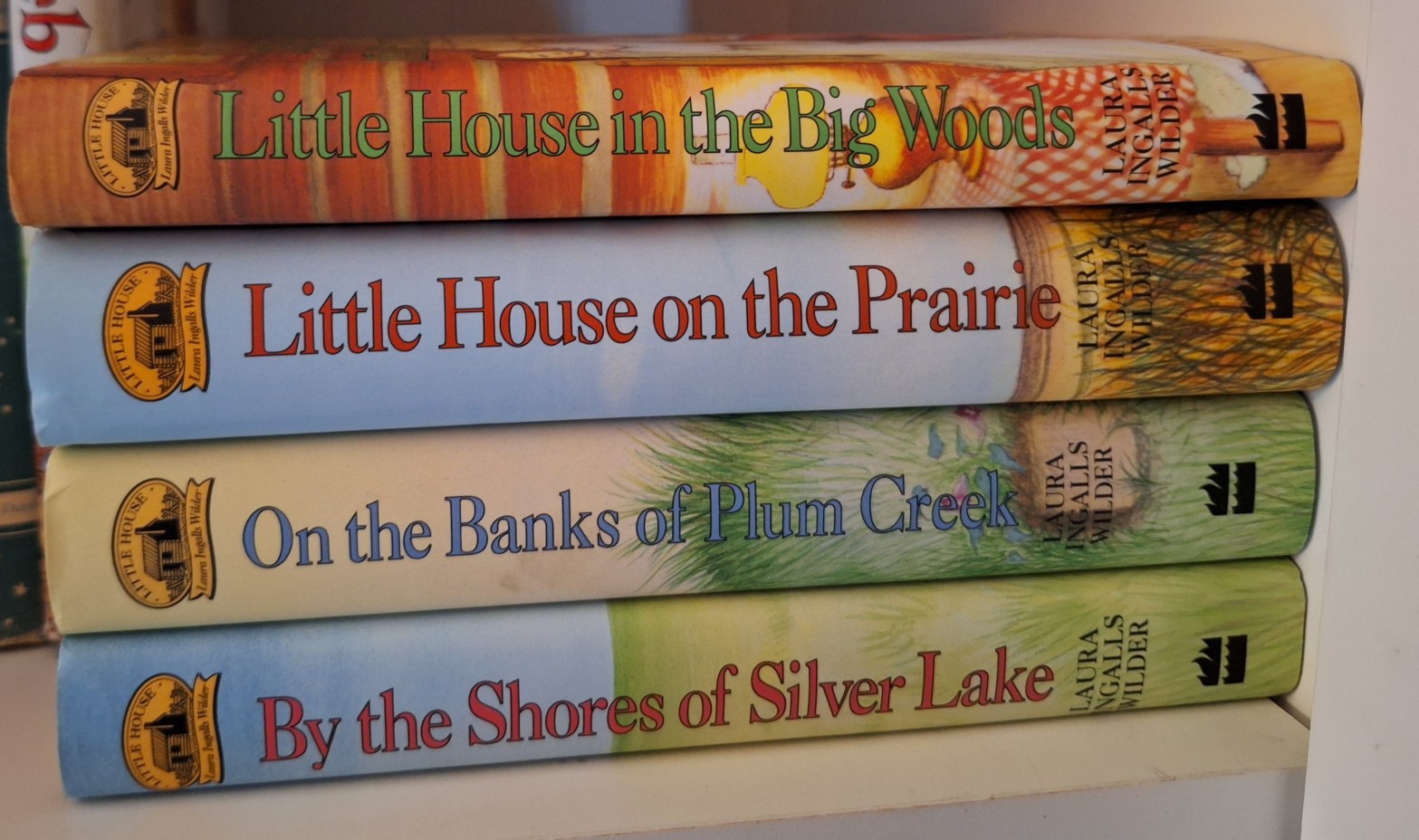
I’ve been at home with Axel for the past two weeks recovering from Influenza A as well as a minor head injury sustained during my bout with the flu (I made a trip to the emergency room: four hours later, after an EKG and CT scan, I had two staples in my head. Don’t lay down on a tile floor if you think you may throw up). I had a few books to go through that I hadn’t read before, but what my heart gravitated toward when I asked “what should I read now?” was Little House in the Big Woods.
I had just rewatched Laura Ingalls Wilder: Prairie to Page, a public television documentary about the author. The documentary isn’t exactly complimentary, and sheds light on numerous unsavory elements about the books. I decided to take the unvarnished truth I had just been reminded of and return to the Big Woods to see if the spell it cast over me as a child has been irretrievably broken.
It turns out that no, I can still appreciate the book I loved as a child.
It’s no secret that the Little House books have weathered a storm of criticism over the past decade or so. There are those who decry blatant instances of racist idealogy sprinkled throughout the series, and others who defend the books and author as being products of their time. As with most layered, complex issues, I don’t think it has to be either / or. I believe the books have value as records of one person’s recollections of her childhood in a family who participated in the development of communities throughout the Midwest. Even if romanticized and fictionalized to an extent, they offer a glimpse of life during that time. And if they veer into troubling territory as tumultuous as the river Pa’s wagon crossed after the spring thaw, then THAT is a true reflection of our own fraught history as Americans.
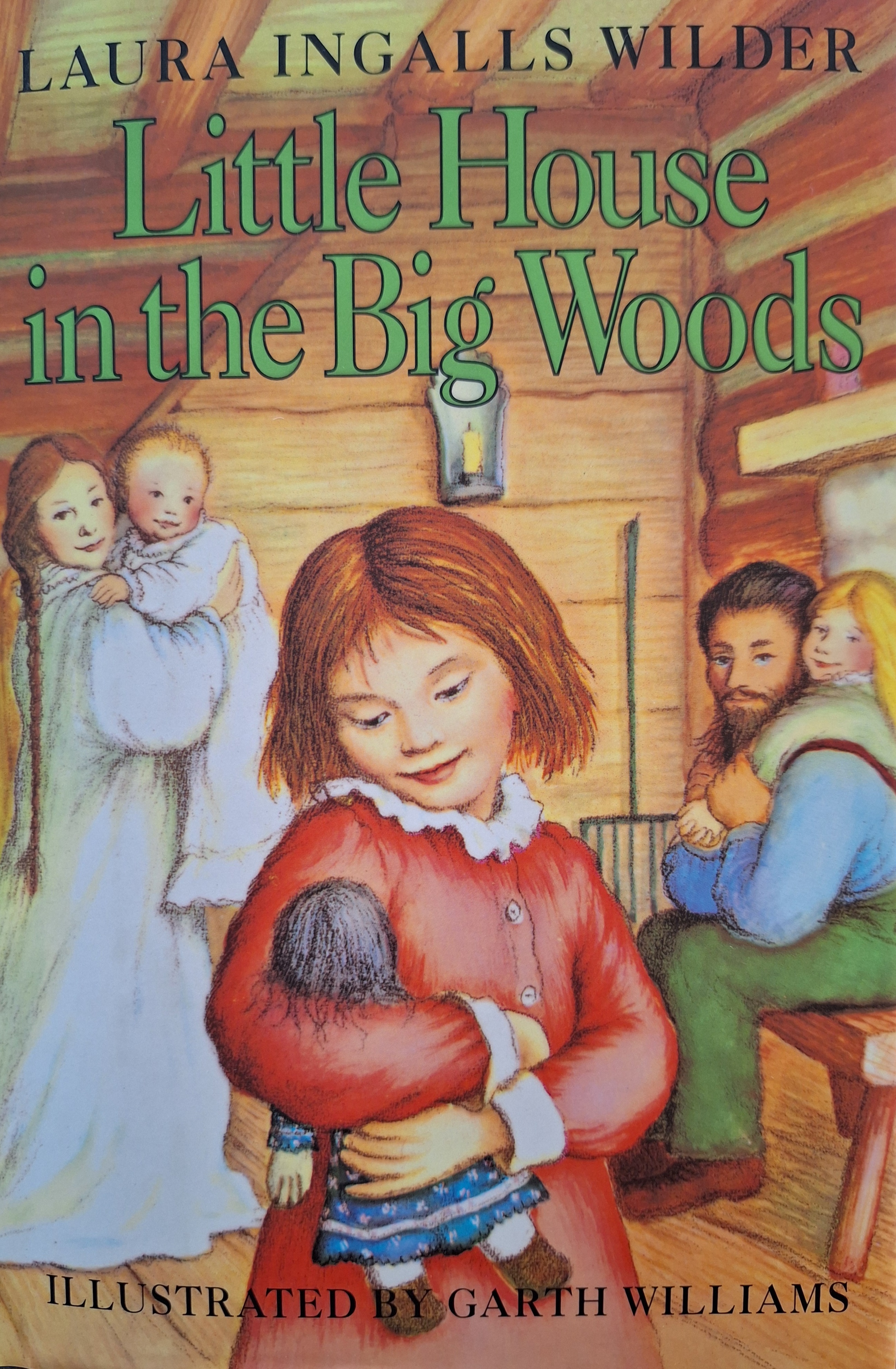
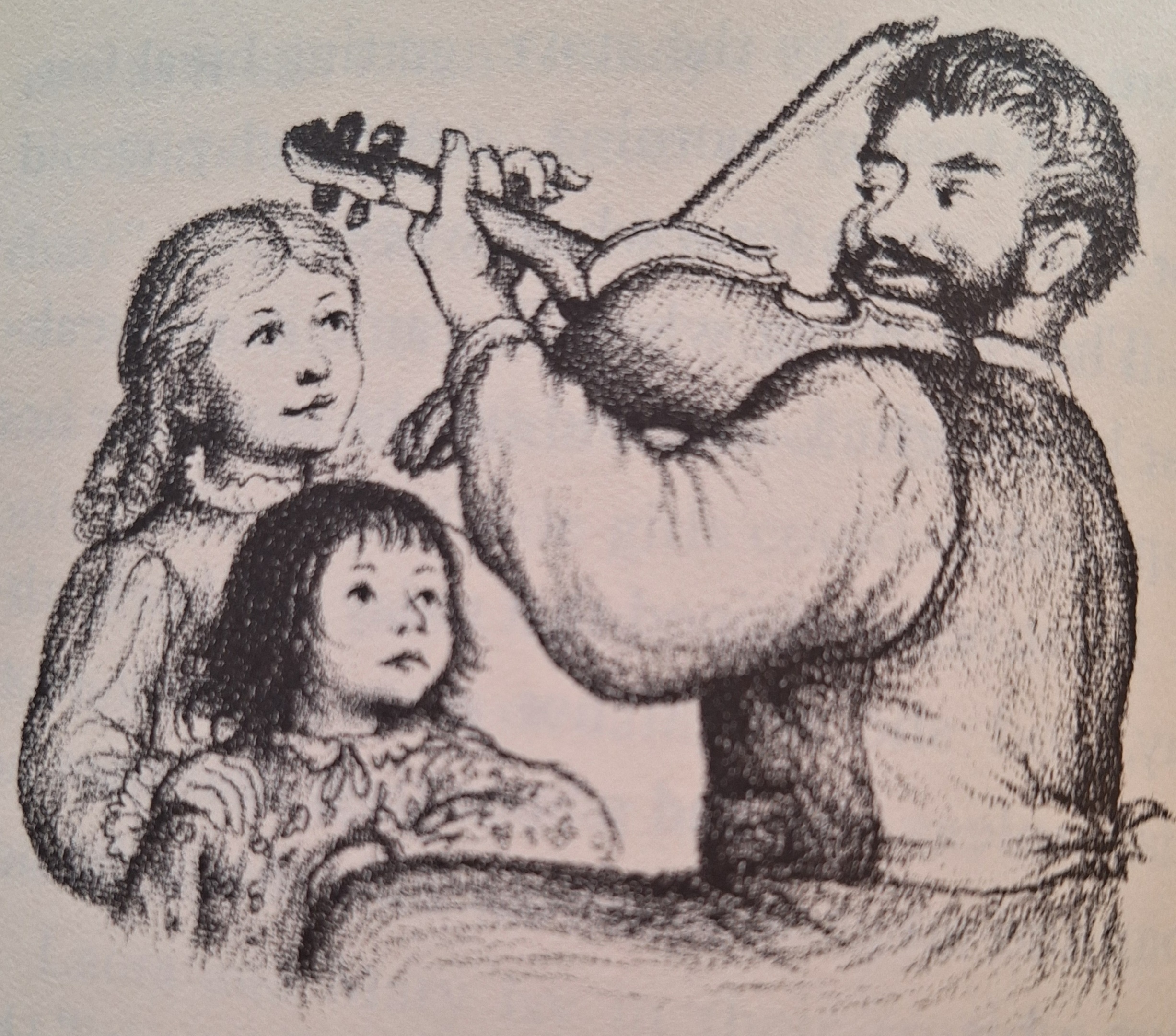
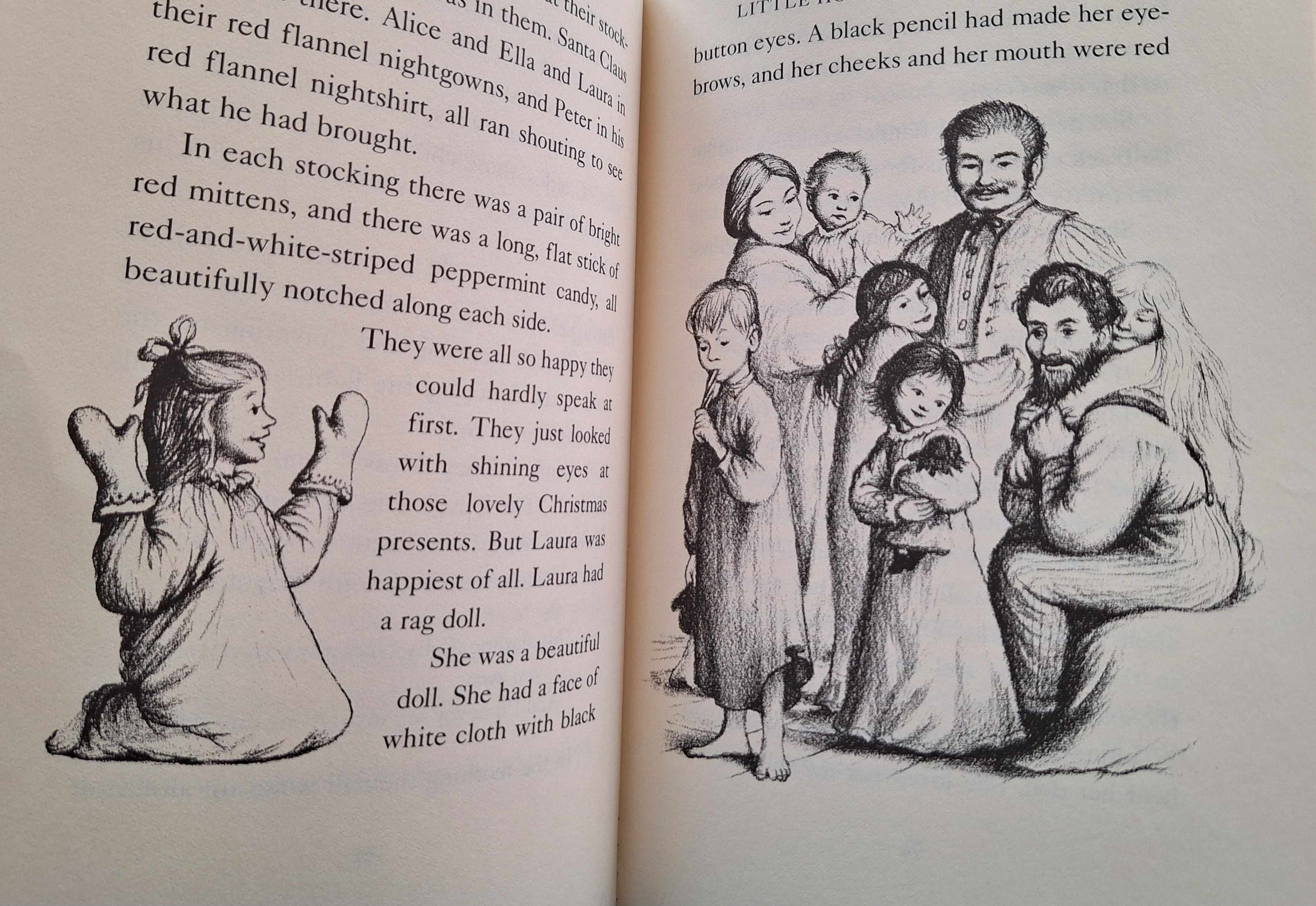
Little House in the Big Woods doesn’t necessarily create the problems that occur later in the series. It has heartwarming descriptions of Christmas morning and maple-sugaring gatherings, with new red mittens, a rag doll named Charlotte, and Grandma jigging in her long skirt, with a wooden spoon in her hand. Much of my make-believe play as a child incorporated elements of the Little House books (my canopy bed served very well as a covered wagon). As I read it this week, I remembered the enjoyment each chapter brought when I read it the first time, which has enhanced my pleasure this time around. I’m appreciating that nowadays I can easily turn to Google for more information about anything I’m curious about: How do you make hasty pudding? Show me the Godey’s Lady’s Book. What is renet?
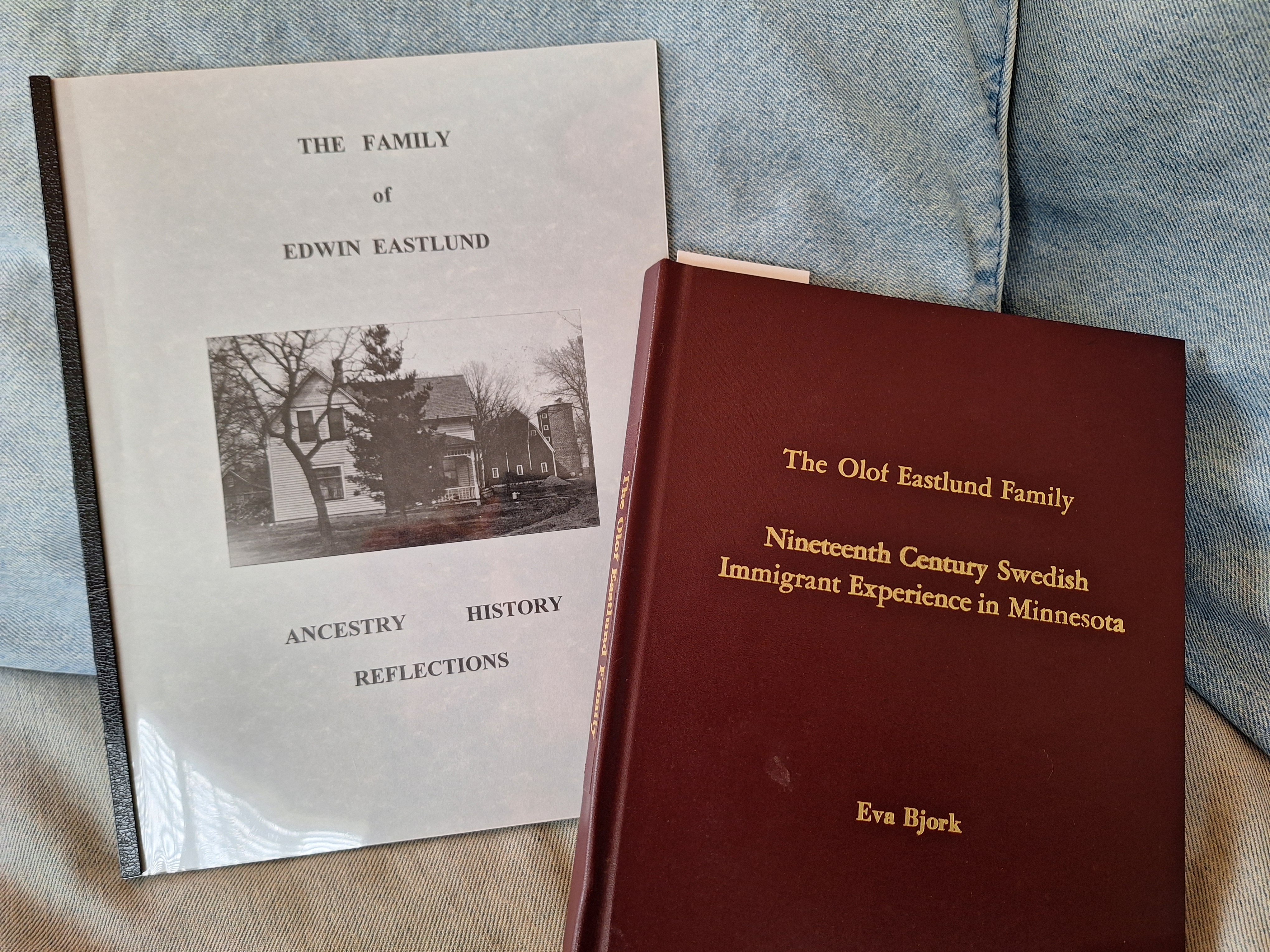
But even as I’ve set myself in the Big Woods of Wisconsin, my mind has wandered to my own ancestors, who were establishing their lives in Minnesota during roughly the same time frame. We have more information about my father’s side, thanks to research conducted by my Aunt Lenore, as well as a wonderful book written by my niece, Eva Bjork Cone, completed when she was a history major at Bethel University. Her dad had it bound and we all received copies at Christmas a number of years ago.
Having arrived from Sweden in 1856, shortly after they married, Olof & Lovisa Eastlund, along with his parents and siblings, settled first in the Chisago Lake / Lindstrom / Scandia area along with so many other Swedish immigrants in Minnesota. They eventually made their way to Isanti County, which is where more Swedish Baptists were settling. According to Aunt Lenore’s record, in March of 1860, Olof and Lovisa and son Peter, along with another family, made the three-day journey from Chisago Lake with a team of oxen. Olof carried two pigs in a sack on his back and Lovisa led a cow and a calf. Having staked a claim, they began to build their home and farm.
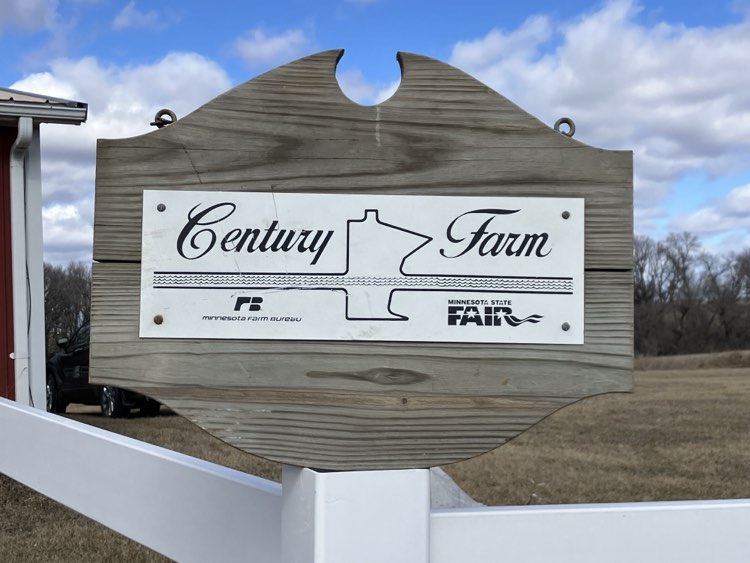
My dad, their grandson, was supremely proud when the farm was declared a Century Farm in the 1980s, and the sign hung there until the property was sold in the past decade.
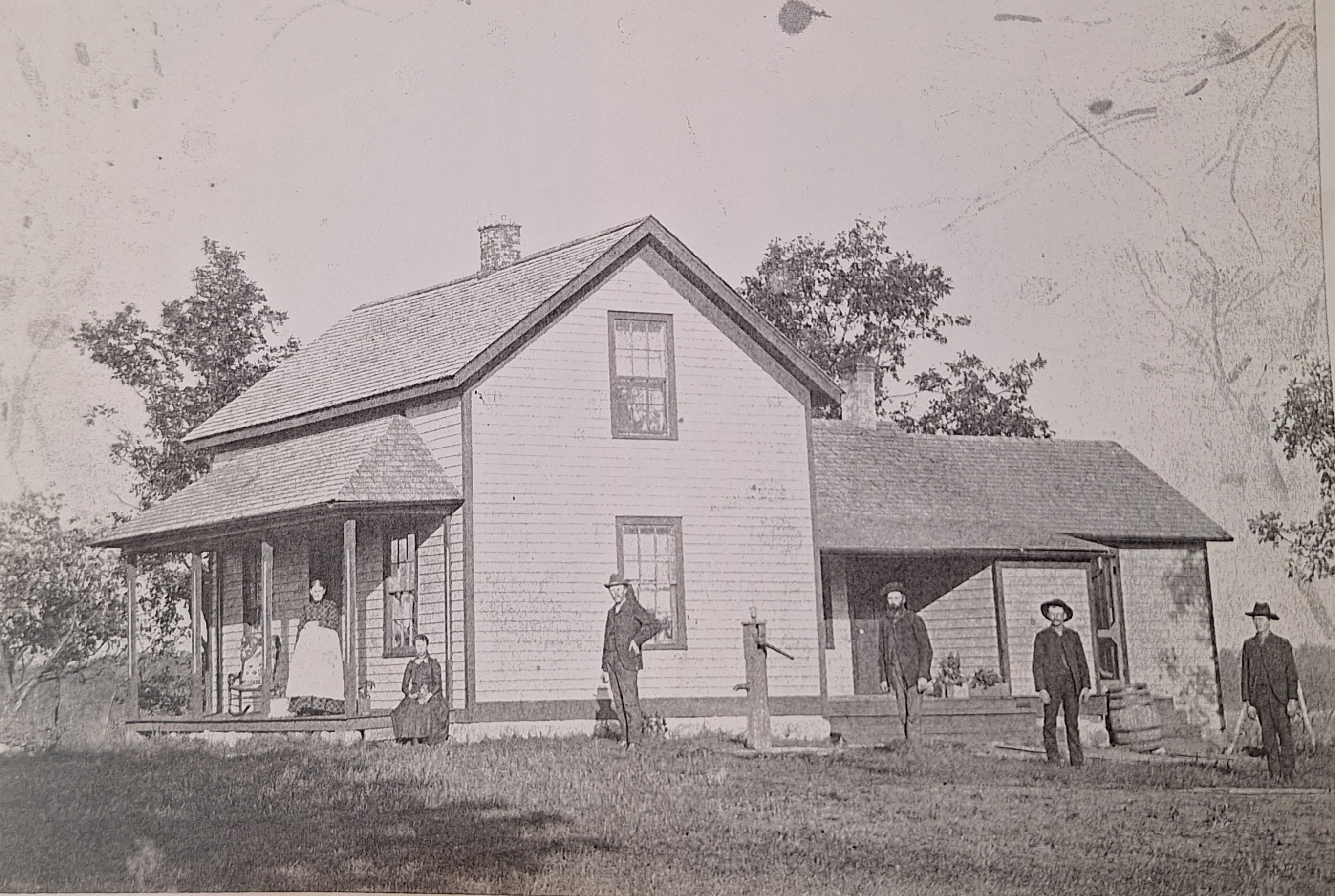
I think we have all been proud of the fact that the Eastlund family was able to hold onto that land for more than 100 years. My cousin and his wife raised their family and still reside on the farm my dad grew up on, which neighbors the original farm. I’m inspired by the family history represented there, as well, especially considering the Depression years, when my dad’s father passed away (my dad was 7 years old, and the ninth of 10 children. An older brother passed away before he was born) and his mother had to continue to farm as a single woman — with only herself, nine children, and hired men to do the job. It speaks to the strength of family, church and community, and a resilient woman’s determination and grit. It speaks to the sustaining power of faith in God.
But at this point, as I reread Little House in the Big Woods, and consider my own family’s history with the land, I’m also aware of what that cost those who were here before us. Back to Google. Prior to European settlement, the Isanti County region was home to Dakotah, Ojibwe, and Potawatomi tribes. The county is named after one nation, sometimes known as the Santees. Now I’m intrigued to find the book telling that story. In Eva’s record, she recounts comments made by my dad’s cousin, Huldah: “My father, Peter Eastlund, told me little about the Native Americans in the area except that there were lots of them…. when his father, Olof, was serving with the Eighth Regiment in 1862 – 1865 (Civil War), his mother, Lovisa, was alone on the farm with Peter and his baby brother (Henry). Ojibway Indians occasionally came to their house and peeked in the windows. Lovisa would give them a loaf of bread and they were always nice to her.”
That our nation was built by pushing out those who were already here has led to the falling out of favor with many for the books written by Laura Ingalls Wilder. And while I understand the thorny history entangled with her warm recollections of her childhood, I don’t believe the books should be cast aside. I don’t see that a fruitful end is served. I first read all the books between the ages of 8 and 12, and distinctly remember my own reactions to certain parts of the narrative that trouble readers today. There are references to native Americans — Indians, in the books, from various points of view. While Pa and Laura seem to be curious about and to accept their culture, Ma is fearful and negative. I KNEW that Ma was behaving badly — not as one should to other human beings, as Laura described Ma’s reactions to the natives they encountered. Laura reported her mother’s response in an almost journalistic style — objectively, and without judgment. I certainly didn’t get the impression she shared Ma’s perspective, or was advocating for it. As far as I can see, she laid it out there and left it up to the reader to judge for themselves whether Ma’s behavior was reasonable or not. Isn’t that what one would wish an author to do for young readers?
With regard to another racist element, when Pa and other men dress up as “darkies” and perform a minstrel act in blackface, that is clearly not defensible. To me as a young reader, it struck a decidedly wrong note in an otherwise pleasing song. I believe it reflects the ignorance and established racism common at that point in time — plus a careless disregard for the feelings that were obviously trampled on by its inclusion. I can’t stand up for Laura Ingalls Wilder, or the publishers. Again, it is a fact of the history of our country. While troubling, I don’t think it means the books don’t have value for readers today. While abhorrent, it reflects how things were, and what was considered entertainment by one faction of society. That, in itself, is a lesson.
Another element that seems to have created additional controversy is that Rose Wilder Lane, Laura’s daughter, was far more heavily involved in the writing of the books than was ever acknowledged during their lifetimes. And research into the Ingalls’ family history has proven that the arc taken by the Little House series in terms of when, where, how and why the Ingalls family roamed the Midwest was highly fictionalized. OK. That may be the case. It is meticulously detailed in the highly annotated book Pioneer Girl, published in 2014, which I read (I can’t say I enjoyed it. It turned the Little House experience into a prolonged exercise in forensic analysis.) For a variety of reasons, Rose and Laura, along with the original publishing house, created a narrative that suited the story they wanted to tell. Many, today, find it distasteful that Rose’s distinct political views (she was a strong advocate of the Libertarian point of view) figured so heavily in the Little House “bootstraps” mythology.
All of that tends to muddy the pond that is the Little House legacy. But isn’t that kind of what our country’s history is? While at moments the glass seems to contain crystal clear water, it doesn’t take much shaking to stir up the layer of sediment that has always been there. I like to think I can appreciate a book for the elements of loveliness, truth, and insights it has to offer — a glimpse of the past, beautifully captured descriptions, warm depictions of family life — as well as recognize that, as a product of its time, it may also be woefully lacking as an honest assessment of the full picture. Both. And.
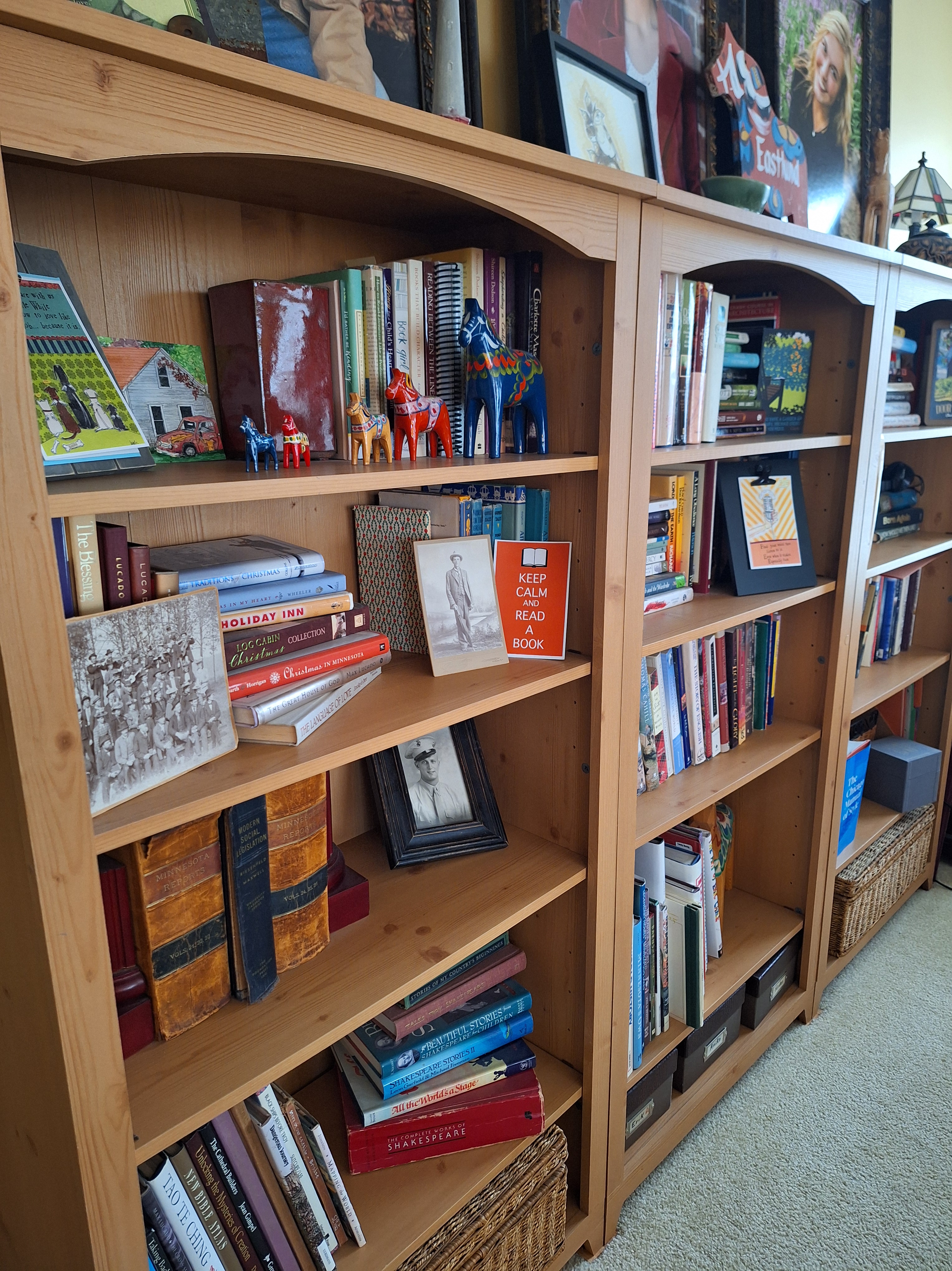
Little House in the Big Woods, along with the rest of the books in that series, has a place on my bookshelf, even if I recognize that the view it offers of our history is a partial, skewed image. These books represent a treasured chapter of my own history as a reader, tempered with my awareness that they fall short of telling the whole story.
Good thing I have more than one bookshelf.

 Karna Eastlund Haugen
I loved this post, Karna. I also loved the LITTLE HOUSE BOOKS, and they continue to love on my book shelves. I learned much of what the pioneer life was like reading thee books. I learned how one small family could get along with so little and still have happiness.
Sorry about your wound and I pray you will recover soon. Please give Axel a pat from me.